Scaleup Media | Warning #3
Prototypes Are Not Products
If this is your first software company, read this carefully.
Seeing something work is intoxicating.
A clickable screen.
A flow that makes sense.
Data moving from one place to another.
It feels like you are close.
You are not.
The Mistake
First-time founders believe:
“If it works, we’re almost there.”
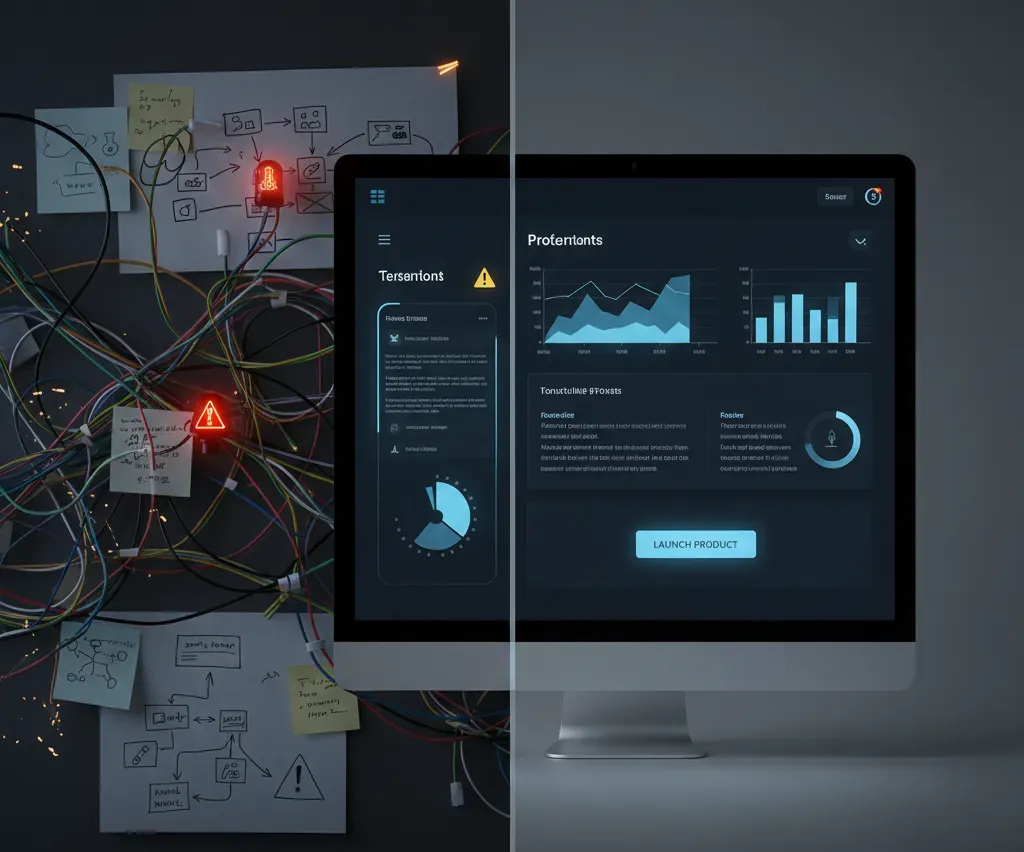
A prototype working does not mean a product exists.
It means something was demonstrated.
It does not mean something can survive.
Why Prototypes Create False Confidence
Prototypes are built to impress.
They:
Ignore edge cases
Avoid scale problems
Skip security considerations
Bypass real user behavior
Assume perfect inputs
Rely on manual work behind the scenes
They are allowed to cheat.
Products are not.
The Gap Most Founders Miss
A product must:
Handle bad data
Support real users simultaneously
Recover from failure
Protect sensitive information
Scale without collapsing
Operate without constant manual intervention
Prototypes do none of this.
Yet founders treat them as milestones.
What Happens Next
Once a prototype exists, a dangerous belief sets in:
“We just need to polish it.”
So you:
Add features
Improve UI
Clean up code
Expand scope
Without realizing the foundation is wrong.
You are decorating something that cannot hold weight.
The Cost of Confusing the Two
This mistake compounds fast.
Founders lose:
Time rebuilding instead of progressing
Money extending something that should be replaced
Leverage with investors who see the cracks immediately
Trust in their own decision-making
Worse, teams become emotionally attached.
Killing the prototype feels like failure, even when it is the right move.
What Investors See Instantly
Investors know the difference.
They recognize:
Demo-ware
Fragile systems
Over-engineered experiments
Products that cannot scale
When you show them a prototype as a product, it damages credibility.
You do not get that first impression back.
What Experienced Operators Do Differently
Experienced operators treat prototypes as disposable.
They are designed to answer one question only:
“Should this exist?”
Once answered, the prototype is discarded.
The product is built separately, deliberately, and correctly.
No emotional attachment.
No sunk-cost bias.
No confusion about what matters.
Why Teams Get This Wrong
Developers often want to evolve prototypes into products.
It feels efficient.
It feels faster.
It feels logical.
It is almost always a mistake.
Shortcuts taken early become hard limits later.
The Warning
If you treat a prototype like a product, you will spend months reinforcing something that was never meant to last.
Most founders learn this after their first rebuild.
This warning exists so you do not have to.
The Safer Path
Use prototypes to learn.
Use products to scale.
Confusing the two costs time, money, and momentum.
Those losses add up faster than you think.
Next Warning:
Dev Shops Are Not Incentivized to Tell You the Truth